Revolut
Year
2021
Industry
Consumer fintech
Role
Research, strategy, product design
Stages
Find, shape, cut, launch
A nugget of insight is found through research. We studied how people behave around money rather than how they describe it, and four principles kept surfacing.
Mental accounting
A tendency to place different values on the same amount of money.
Pain of paying
Payment aversion. The further a person is from cash, the less the pain of paying is.
Money is abstract
A thousand pounds in a retirement account, or a bicycle now? We are not sure what we are gaining or giving up.
Opportunity cost
When I buy this item, what do I give up on instead?
Open data sharpened the picture. Each finding became a design decision rather than a slide.
Design principles
Control · Save · Feel good · Guide
Taken from the frequency vocabulary of the research and its highlights, these four principles guided every design decision that followed.
Customer journey map

Low fidelity. Initial drafts of the solution, shaped in close collaboration with the client.
Long-term goal
In two years time the Revolut budgeting tool onboards customers smoothly, consolidates all their expenses, and guides them through the steps of achieving healthier spending habits.
Cut
Facets polished to shine bright. The product went live with a deliberately small set of features, each one traceable to something the research or the testing had told us.
Activity
A daily chart keeps the overview in view. Analytics lean on a readable mental accounting pie chart, and the flow reads as a feed of budgeting actions.
Auto goal
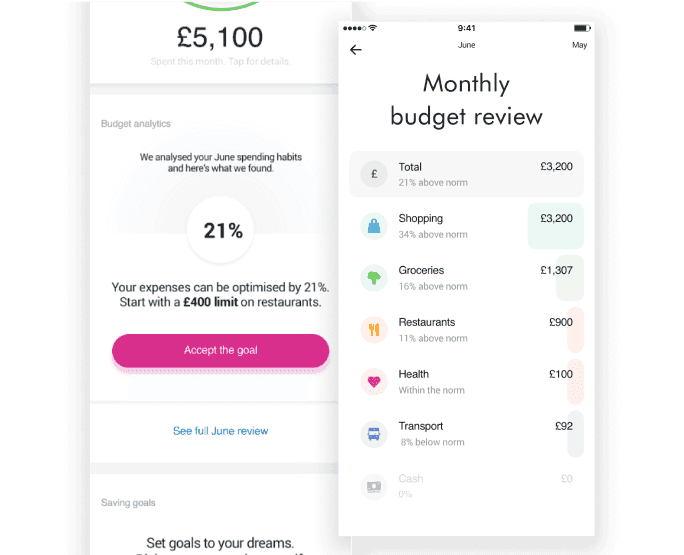
Testing showed people struggle to set limits on the spot. Alongside the manual feature, the tool reads their finances and proposes one monthly goal.

Saving goal
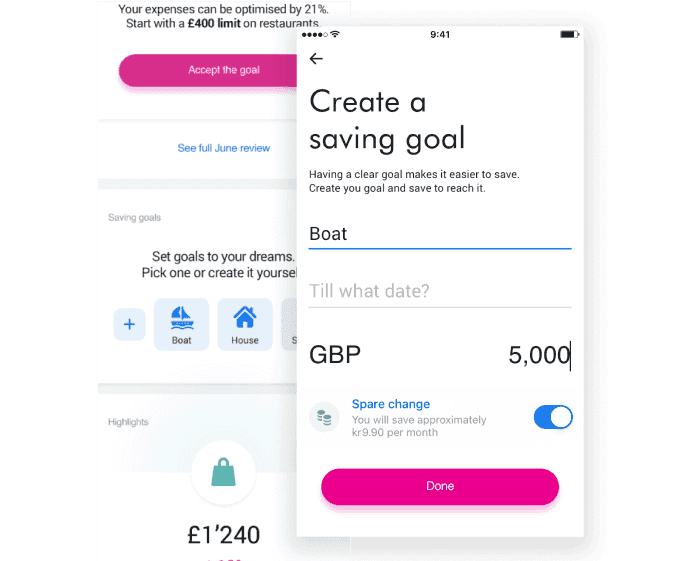
To help people set goals at all, we inspire them with examples. Budgeting, in the end, comes down to saving in a user’s mind.
Highlights
Unusual activity is analysed and surfaced as a highlight of the month. Set a limit per category and you can make it hard, so the card bounces until you unlock it.

Retrospective
It helps to think about spending in hindsight. After a large purchase, we invite people to evaluate it.

Key milestones
User testing
Facilitation
Strategy
Vision
Value based roadmap
Prototype
Design
Full cycle
Final user test
Strategic insights shown here are skewed for presentation purposes, and results may differ from the client’s official stance.